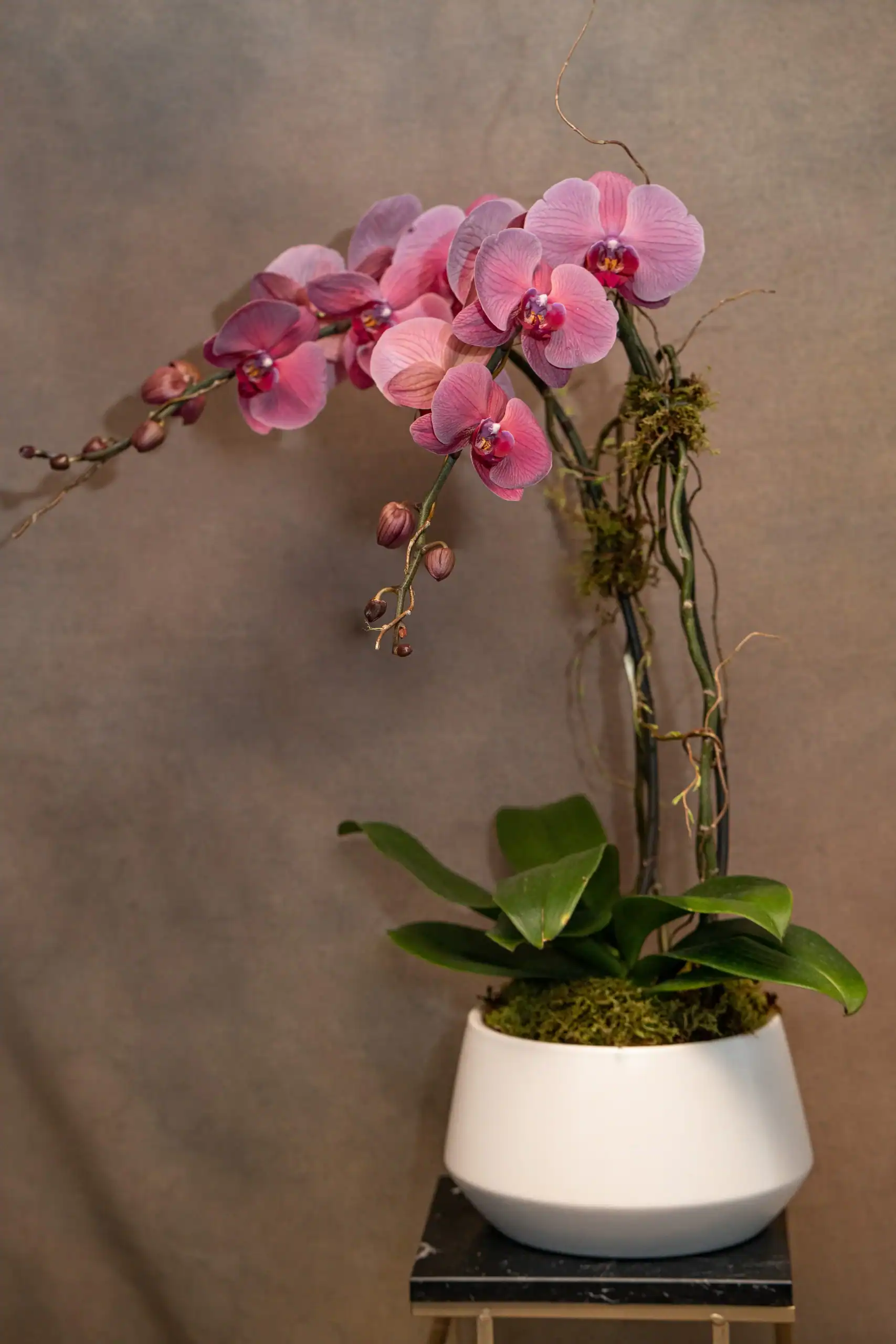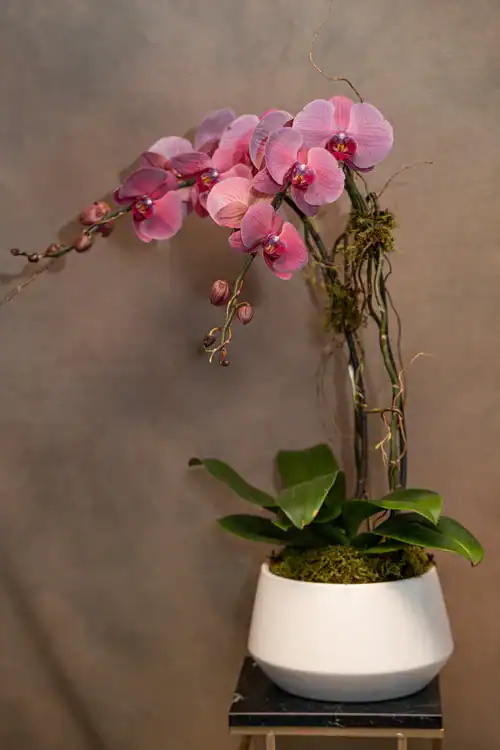
NYC Midtown summer heat and heavy AC are brutal on orchids. Here's how to keep your July 4th display looking sharp from the first sparkler to the last.
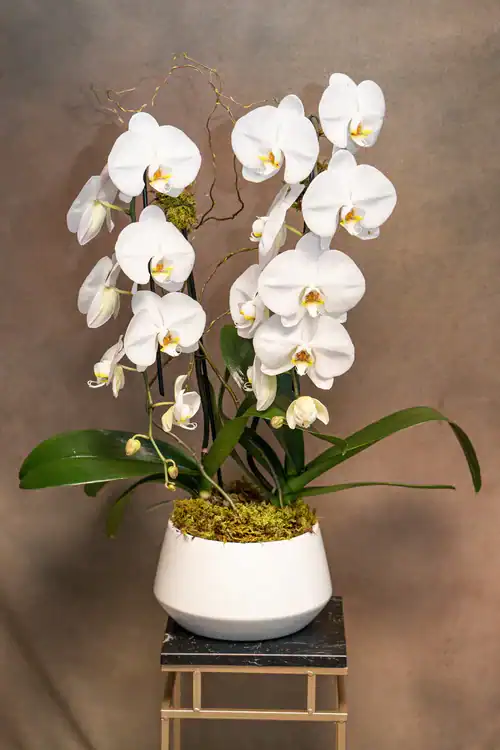
Here’s the thing about orchids in a New York City Midtown summer: the threat isn’t just the heat outside. It’s the war between that heat and your air conditioning inside. One minute your orchid is sitting in 90-degree air near an open window, and twenty minutes later it’s catching a cold blast from the AC vent across the room. That kind of swing is exactly what causes buds to drop and blooms to fade before you’ve even lit the grill.
If you’re planning a July 4th orchid display — or you just received one and want it to actually last — this is the guide that gives you the real answers, not the generic advice you’ve already read a dozen times.
Most people assume orchids love heat because they’re tropical plants. That’s only half true. Orchids thrive in warmth, but the operative word is stable warmth — somewhere between 65°F and 85°F, with consistent humidity and no sudden swings. A Midtown apartment in July is basically the opposite of that.
Outdoor temperatures regularly hit 90°F or higher on the streets around Fifth Avenue and Sixth Avenue, and the urban heat island effect means Midtown runs a few degrees hotter than the outer boroughs. Open a window to let in a breeze and your orchid is suddenly exposed to conditions it was never built to handle. The result is heat stress, bud blast, or both — and neither is pretty when you’re trying to impress guests.
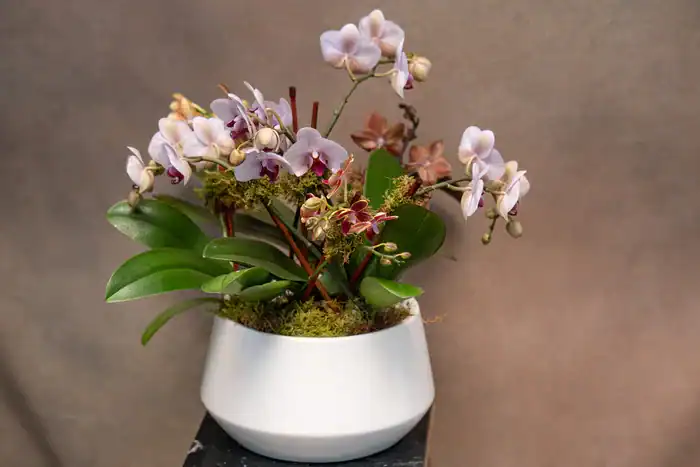
This one catches people off guard every single summer. You crank the AC to survive the July heat, which is completely reasonable, and your orchid ends up parked right in the path of the cold air blowing from the vent. Within a week, the leaves start looking dull, the buds start dropping, and you’re convinced you did something wrong. You didn’t — you just didn’t know about the draft.
Cold air blowing directly on an orchid does two things that are both damaging. First, it drops the temperature around the plant well below the comfortable range, which triggers bud blast — the orchid’s stress response where it drops its flowers before they fully open. Second, the constant airflow strips moisture from the surrounding air, and orchids are tropical plants that genuinely need humidity levels between 55 and 75 percent to stay healthy. A heavily air-conditioned Midtown apartment in July can drop well below that.
The fix is straightforward: move the orchid away from any direct line of airflow from your AC unit or any ceiling vents. A few feet can make a significant difference. If your apartment runs cold and dry all summer — which is common in the high-rises around Midtown West and Midtown East — placing the orchid’s pot on a shallow tray filled with pebbles and water adds passive humidity back into the immediate environment without overwatering the roots.
What you’re aiming for is a spot that stays consistently comfortable — not hot, not cold, not drafty. Think of the places in your apartment where you’d actually want to sit for a few hours. Near a north- or east-facing window, away from vents, away from exterior doors that get propped open. That’s where your orchid wants to be too.
South-facing windows in Midtown high-rises get intense afternoon sun in July — the kind that feels warm on your skin even through the glass. For you, that might be pleasant. For a Phalaenopsis orchid sitting on the windowsill, it’s genuinely dangerous. Direct midday sun can burn orchid leaves quickly, leaving bleached, papery patches that don’t recover, and the heat buildup near the glass can push the temperature well past the safe range.
Phalaenopsis — the moth orchid, and the variety most commonly found in well-curated orchid boutiques and quality florists — actually prefers bright indirect light, not direct sun. That means a spot near the window but not in the direct beam of sunlight. Sheer curtains work well here. They filter the light enough to protect the plant while still giving it the brightness it needs to stay in bloom.
If you’re setting up a July 4th display on a terrace or rooftop — which is a very real scenario for anyone hosting a gathering in one of Midtown’s residential towers — keep the orchid out of direct sun and plan to bring it inside before the hottest part of the afternoon. Orchids can handle a few hours outdoors in the morning when temperatures are still manageable, but leaving them in full sun past noon on a July day in New York is asking for trouble. The same logic applies to any display near a window that gets afternoon light: a sheer curtain or a slight repositioning away from the glass is all it takes to protect the blooms.
One more thing worth knowing: wind is also a factor on rooftop setups. Orchids don’t love strong airflow any more than they love AC drafts. If you’re displaying them outside, choose a sheltered spot or bring them in before the evening breeze picks up.
Want live answers?
Connect with a Columbia Midtown Florist expert for fast, friendly support.
Overwatering is the single most common reason orchids die, and it happens even more often in summer when people assume the heat means the plant needs more water. It doesn’t work that way. Orchid roots need to dry out between waterings — they’re designed to absorb moisture quickly and then breathe. Roots sitting in standing water will rot, and root rot is very hard to reverse.
In summer, most Phalaenopsis orchids need watering about once a week. The clearest way to check is to lift the pot. If it feels light, it’s time. If it still has some weight to it, wait another day or two. When you do water, do it thoroughly — let water run through the drainage holes and then let the pot drain completely before putting it back in its decorative container.
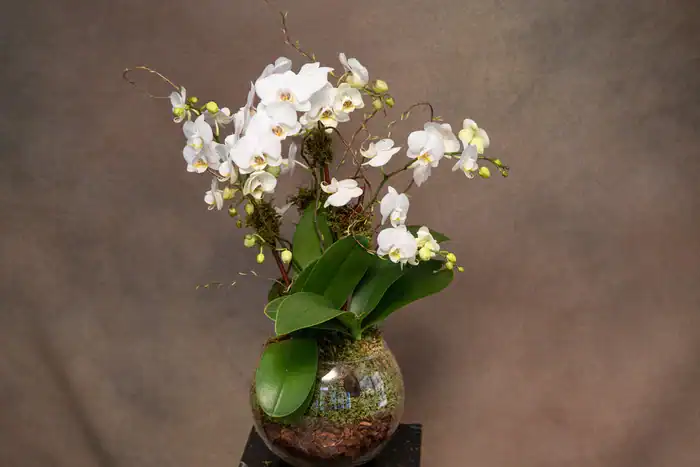
The honest answer is: less often than you think, but more thoroughly than you’re probably doing it. Most people either underwater their orchids out of fear or overwater them out of guilt. Neither approach works.
In a warm NYC Midtown apartment in July, a Phalaenopsis orchid will typically need water once every seven to ten days. The heat does speed up the drying process slightly compared to cooler months, so you may find yourself watering a little more frequently than in winter — but the threshold is still “the medium is dry,” not “it’s been a few days.” Stick your finger about an inch into the potting medium. If it feels dry, water. If it still feels damp, leave it alone.
When you water, do it in the morning if possible. This gives the roots and any moisture on the leaves time to dry before the cooler evening temperatures set in. For a July 4th display that you want looking its best for the holiday, water it the morning of — the blooms will be hydrated and the plant will look as fresh as it can.
One thing to avoid: misting the flowers directly. Light misting around the leaves and aerial roots can help with humidity, which is genuinely useful in a dry, AC-heavy Midtown apartment. But water sitting on the blooms themselves can cause spotting, which is not what you want when the orchid is the centerpiece of your July 4th table. Keep the mist directed at the foliage and the roots, not the flowers.
As for fertilizer — a diluted, balanced orchid fertilizer applied once a month in summer is plenty. More is not better with orchids. They’re not heavy feeders, and over-fertilizing can actually cause more harm than skipping it entirely.
This is the question nobody asks until they’re standing in their apartment on July 5th with an orchid that survived the party and wondering what comes next. The good news is that a healthy orchid — one that was in peak bloom when it arrived and was kept in the right conditions — can stay in bloom for two to three months. Your July 4th centerpiece can still be looking sharp in September.
The key is consistency after the event. Once the party’s over, find the orchid a permanent spot that meets the conditions we’ve already covered: indirect light, away from AC vents and exterior drafts, stable temperature, and a weekly watering routine. Orchids don’t love being moved around. Every time you relocate the plant to a new environment, it has to readjust, and that stress can shorten the bloom cycle. Pick a good spot and leave it there.
When the blooms eventually do drop — which will happen, even with perfect care, because that’s just the natural cycle — don’t throw the plant away. This is one of the most common and most unnecessary mistakes people make. A healthy orchid will rebloom, typically within eight to twelve weeks after the first bloom cycle ends, if you cut the spent spike back to just above a node and continue caring for the plant. What looks like a dead plant is usually just a resting one.
If your orchid is displayed in a decorative ceramic or modern container — the kind that actually makes the plant look like it belongs in a Midtown apartment rather than a greenhouse — make sure there’s still proper drainage happening. Beautiful containers are great, but orchid roots cannot sit in water that pools at the bottom of a sealed pot. Either use a nursery liner inside the decorative container and remove it to drain after watering, or add a layer of pebbles at the bottom to keep the roots elevated above any standing water.
One last thing: if you’re in a Midtown high-rise and your apartment gets very dry in summer from constant AC use, check the plant every few days in the first couple of weeks after the holiday. Dry air speeds up the drying cycle of the potting medium, which means you may need to adjust your watering schedule slightly. Once you’ve got a feel for how your specific apartment affects the plant, it becomes second nature.
The care side of this is genuinely manageable once you know what to watch for. The bigger question for most people in Midtown is finding an orchid that’s actually worth caring for in the first place — one that arrives in peak bloom, in a container that doesn’t embarrass you, delivered by someone who knows how to navigate a doorman building without the whole thing becoming a production.
That’s what we do at Columbia Midtown Florist. We’re located at 3 West 51st Street, steps from Rockefeller Center, and we hand-select every orchid each morning from the NYC Flower District. Same-day delivery is available throughout Manhattan when you order by noon — and because we’re physically in Midtown, not routing your order through a wire service or shipping from a warehouse in another state, the orchid that arrives at your door is the orchid we chose that morning.
If you’re planning a July 4th display or sending one as a gift this holiday, reach out to us at Columbia Midtown Florist. A bloom that lasts through summer is worth getting right from the start.
Summary:
Article details:
Share: