Your home office might be missing the one thing that could actually help you focus better and stress less. Here's what the science says about orchids.
You’ve probably heard people say plants make you more productive. Maybe you’ve rolled your eyes at the idea that a single orchid on your desk could change anything about your workday.
Here’s the thing: the research is real. Studies from major universities show that having plants in your workspace can actually improve your reaction time, lower your stress, and help you concentrate better. Not by magic—by measurable changes in how your brain and body respond to your environment.
If you work from home in NYC and your office feels more draining than inspiring, this might be worth your time. Let’s talk about what orchids actually do, how they work, and whether they’re worth the space on your desk.
Orchids aren’t just sitting there looking elegant. Research from Washington State University found that people working near plants had 12% faster reaction times on computer tasks compared to those in plant-free spaces. That’s not a small difference when you’re trying to get through a packed afternoon.
The University of Michigan found similar results. Their study showed that having plants around can boost memory retention by up to 20% and improve concentration. Again, this isn’t about believing in plant energy—it’s about how your brain responds to visual cues and environmental factors.
Orchids specifically work well for home offices because they release oxygen at night, unlike most plants. That steady oxygen flow contributes to better air quality throughout the day, which directly impacts how clearly you think and how quickly you fatigue.
Your brain processes a lot more than you realize when you’re staring at a screen. The colors around you, the air quality, even the presence of living things—all of it registers and affects how well you can focus.
Studies show that the color green has a calming effect that helps with emotional stability and concentration. Orchids bring that visual break into your peripheral vision without demanding attention. You’re not constantly looking at them, but your brain registers their presence, and that subtle connection to something natural helps reduce mental fatigue.
Research from Exeter University in the UK found that indoor plants can improve concentration and staff well-being by 47%. The presence of orchids in particular has been linked to reduced anxiety and improved mood, which makes sense when you consider how much time you spend looking at the same four walls.
There’s also the air quality factor. Dendrobium orchids can help remove airborne toxins like xylene—a chemical found in paints and solvents. If you’ve recently painted your home office or live in a newer building, that matters more than you’d think. Cleaner air means fewer headaches, less brain fog, and better overall cognitive function throughout your workday.
The best part? You don’t need a jungle. One well-placed orchid on your desk or a nearby shelf gives you most of these benefits. It’s not about quantity—it’s about having that visual and environmental anchor that reminds your nervous system to settle down.
If you’re in Midtown Manhattan or anywhere across NYC and want same-day delivery, we source fresh orchids daily and can have them at your door within hours.
If you live in NYC, you know space is everything. You can’t fill your apartment with oversized plants, and your home office probably doesn’t have room for anything that sprawls.
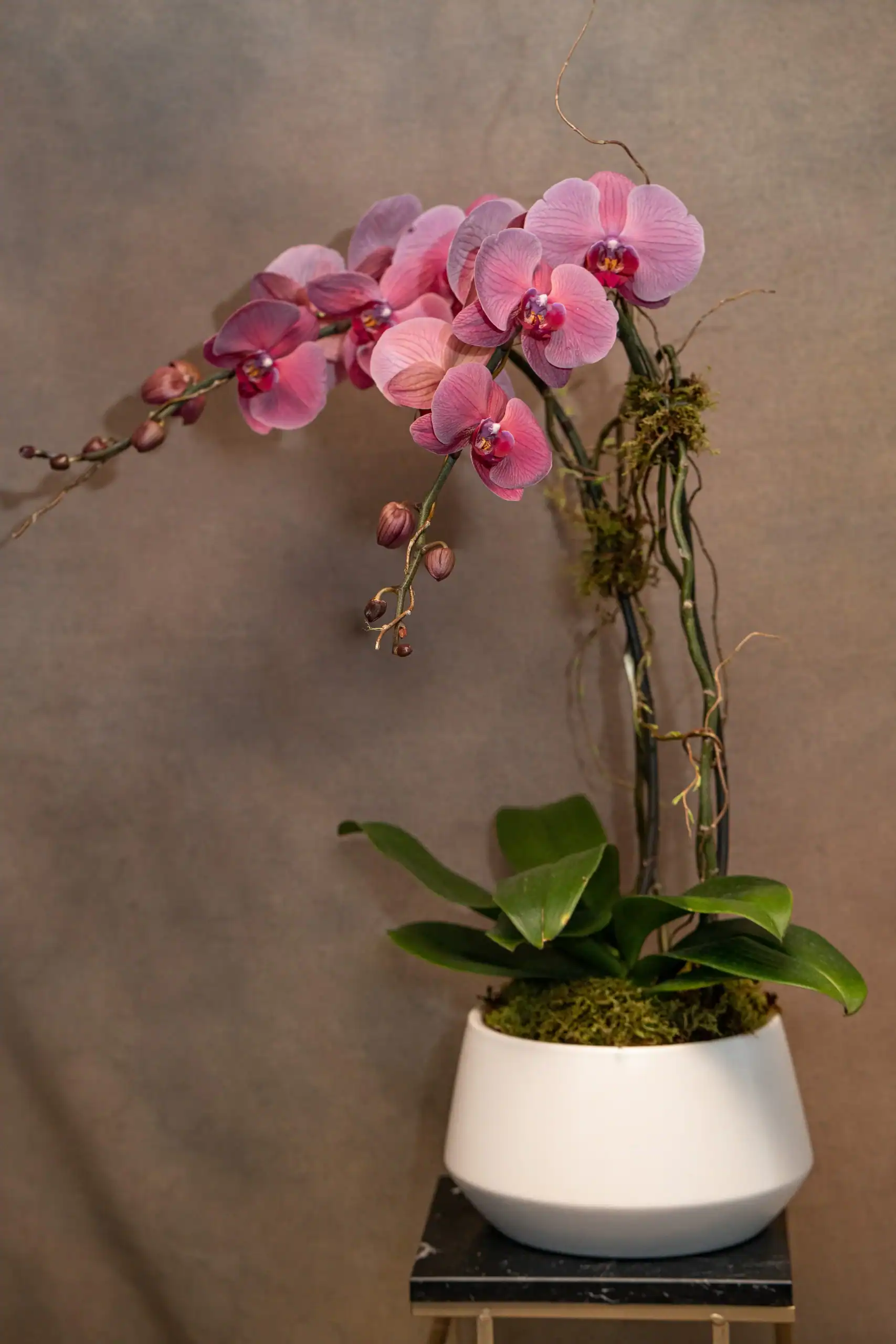
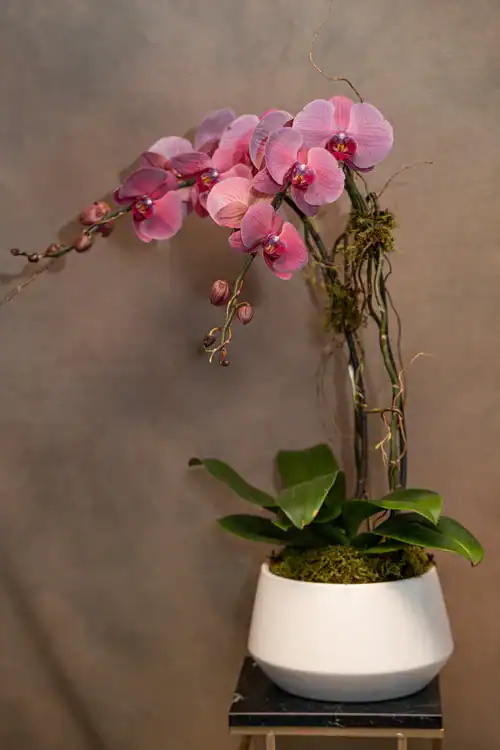
Orchids fit where other plants don’t. A single phalaenopsis orchid takes up about as much space as a coffee mug but delivers visual impact that fills the area. They grow vertically, not horizontally, which means you can tuck them on a windowsill, a corner of your desk, or a small shelf without losing valuable workspace.
They also last. Cut flowers die in a week. Most blooming plants fade after a few weeks. Orchids bloom for two to three months straight with basic care, and then they rest before blooming again. You’re getting months of visual appeal and environmental benefits from one plant, which makes them a better investment than constantly replacing bouquets or same-day flowers that wilt quickly.
Maintenance is minimal. Phalaenopsis orchids—the most common type you’ll find—need water about once a week and indirect light. That’s it. No complicated feeding schedules, no constant pruning, no guessing games about whether you’re doing it right. If you can remember to water something once a week, you can keep an orchid alive.
Compare that to ferns, which need high humidity and constant attention, or succulents, which can be tricky despite their reputation for being indestructible. Orchids give you the aesthetic and health benefits without the drama.
They also handle low light better than most flowering plants. If your home office doesn’t get a ton of natural light—common in Manhattan apartments—orchids will still thrive. You don’t need a south-facing window or grow lights. Indirect light from a nearby window works fine, which makes them one of the few plants that can actually survive in typical NYC living conditions.
Want live answers?
Connect with a Columbia Midtown Florist expert for fast, friendly support.
There’s a lot of wellness marketing out there that promises the moon and delivers nothing. So it’s fair to be skeptical about whether a plant can actually affect your stress levels.
The research backs it up. A study from the University of Hyogo in Japan specifically tested office workers who kept small indoor plants on their desks. They measured psychological stress using standardized anxiety inventories and found that participants who could see and care for plants experienced significant decreases in anxiety.
Rutgers University found that people who receive flowers report increased happiness and lower depression for days afterward. The study showed that flowers activate dopamine, oxytocin, and serotonin—the chemicals in your brain responsible for reward, connection, and stability. It’s not just a nice gesture. It’s a measurable chemical shift in how your brain functions.
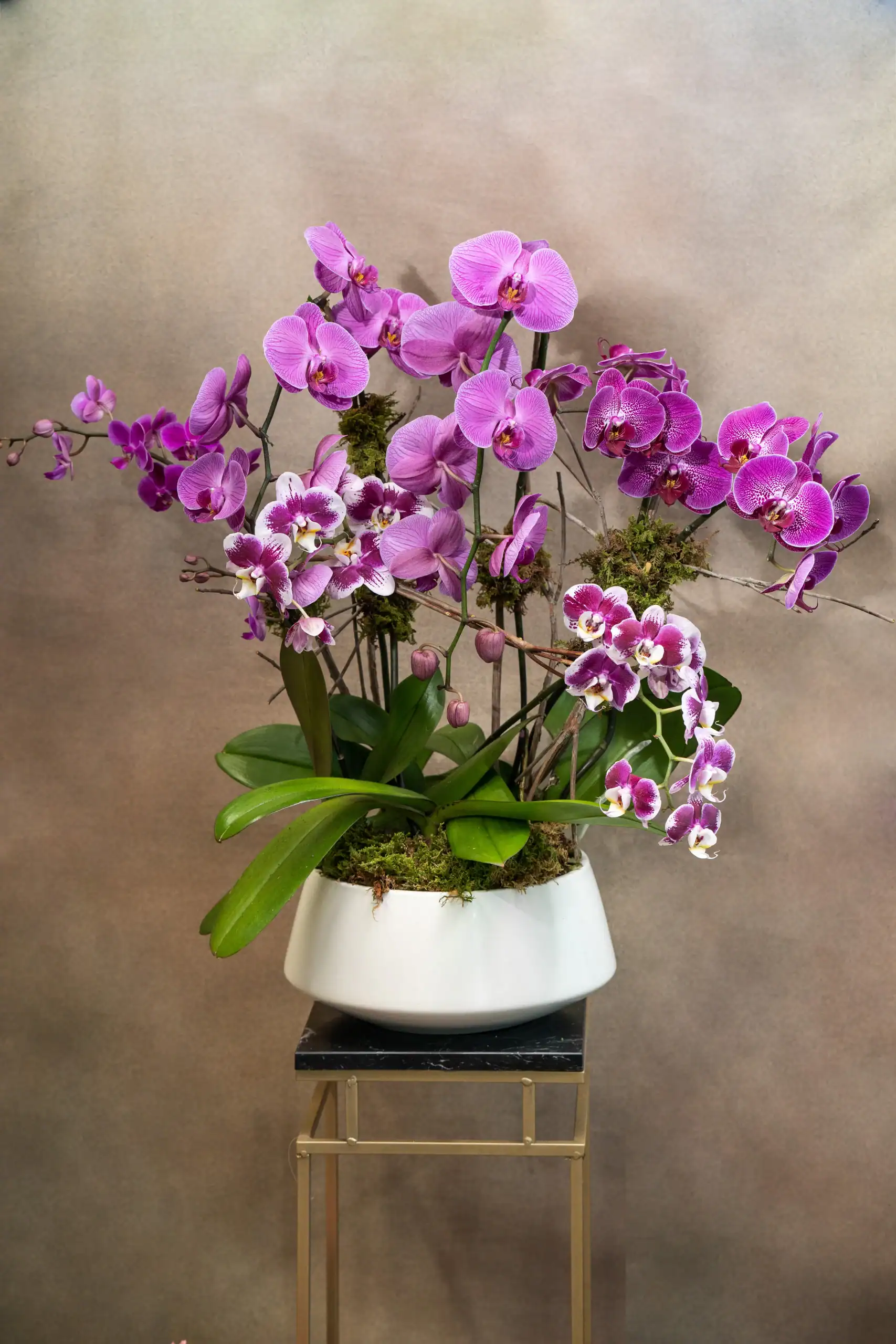
When you’re stressed, your body produces cortisol—a hormone that’s helpful in short bursts but damaging when it stays elevated. Chronic stress leads to brain fog, poor decision-making, and that constant feeling of being overwhelmed.
Research shows that interacting with plants can reduce cortisol production. It’s not about meditating with your orchid or doing anything unusual—just having it in your visual field while you work creates a calming effect that your nervous system registers.
A study from Washington State University measured blood pressure in people working near plants versus those in plant-free environments. The group with plants had lower systolic blood pressure readings—one to four units lower, which is significant when you’re talking about daily stress management.
The Norwegian University of Life Sciences found that employees in offices with indoor plants experienced less stress and fewer sick days than those in environments without greenery. The psychological and physiological benefits were measurable and consistent across different types of workplaces.
What makes orchids particularly effective is their visual presence. They’re elegant without being distracting. You’re not constantly thinking about them, but they’re there in your peripheral vision, providing that subtle connection to something living and natural. That connection matters more than most people realize, especially when you’re spending eight hours a day in the same room.
There’s also the care aspect. Taking a three-minute break to water your orchid or check on it gives your brain a moment to reset. It’s a form of active rest—you’re doing something with your hands, focusing on something other than your screen, and giving your mind a chance to process what you’ve been working on. Those micro-breaks add up over the course of a day.
Placement matters. You want your orchid where you can see it without it being in your direct line of sight. Off to the side of your monitor, on a nearby shelf, or on the corner of your desk works well. The goal is peripheral presence, not constant distraction.
Lighting is straightforward. Orchids like bright, indirect light. Near a window but not in direct sun is ideal. If your home office is in a room that doesn’t get much natural light, orchids will still survive—they’re more tolerant of low light than most flowering plants. Just avoid putting them in a completely dark corner or directly under harsh overhead lights.
Watering once a week is the standard recommendation, but you’ll adjust based on your environment. If your apartment runs dry in winter, you might need to water slightly more often. If it’s humid, you might stretch it to every ten days. The key is not to overwater—orchids hate sitting in water. Let the potting medium dry out between waterings.
You don’t need to fertilize constantly. Once a month during the growing season with a balanced orchid fertilizer is plenty. Some people skip fertilizing altogether and their orchids do fine. It’s not a high-maintenance situation.
When the blooms eventually fade—and they will, after two to three months—don’t panic. The plant isn’t dead. It’s resting. Trim the spent flower spike, keep watering on your normal schedule, and in six to twelve months, it’ll bloom again. Some people enjoy that cycle. Others just appreciate the long bloom period and treat it like a very long-lasting bouquet.
If you’re in NYC and want to try this without overthinking it, same-day orchid delivery makes it easy. You can order a phalaenopsis orchid in the morning and have it on your desk by afternoon. We deliver fresh orchids throughout Manhattan and Midtown with care instructions included, so you’re not guessing about what to do. We source from the NYC Flower District daily, which means you’re getting quality plants that actually last.
If you’re working from home and your space feels uninspiring, an orchid isn’t going to solve everything. But the research is clear that it can help—measurably—with focus, stress, and overall mental clarity.
You’re looking at minimal maintenance, months of blooms, and genuine cognitive benefits backed by university studies. For the space it takes up and the effort required, it’s one of the simpler ways to improve your daily work environment.
If you’re in NYC and want to see what the difference feels like, we offer same-day orchid delivery throughout Manhattan and Midtown. You can have a fresh orchid on your desk this afternoon and decide for yourself whether it changes how your workspace feels.
Summary:
Article details:
Share: