Small Midtown apartment feeling more like a storage unit than a sanctuary? These 7 modern flower arrangements bring nature indoors without overwhelming your space.
Small space living comes with real challenges. Limited storage, zero privacy, and that claustrophobic feeling when the walls seem closer than they did yesterday. Most people try to solve this with furniture hacks or minimalist purges, but they overlook one of the simplest fixes: nature.
Flowers do more than look pretty on a windowsill. Research shows they directly impact your mental health by triggering dopamine, serotonin, and oxytocin—the same chemicals your brain releases when you’re genuinely happy. They also reduce anxiety, improve focus, and help regulate your breathing and heart rate when you’re stressed.
In a city where green space is a luxury and your “backyard” is a fire escape, flowers bring the outside in. That connection to nature—what designers call biophilic design—has been shown to boost productivity and creativity by up to 15%. For anyone working from a studio apartment, that’s not a nice-to-have. It’s essential.
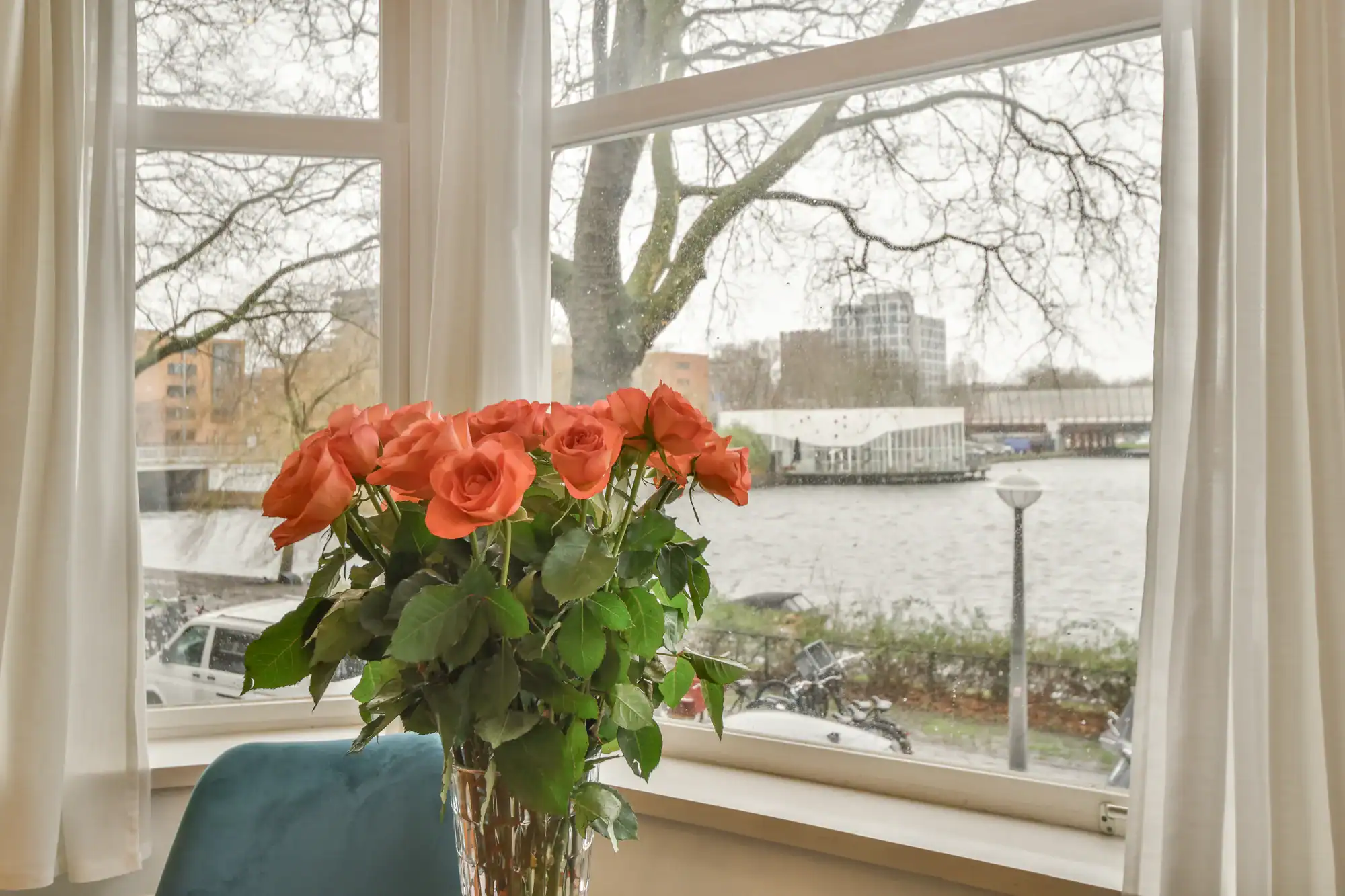
Not every arrangement belongs in a small apartment. A sprawling centerpiece might look stunning in a magazine, but in a 250-square-foot studio, it’s just clutter with petals.
Apartment-friendly arrangements share a few key traits. First, they’re proportional. A single statement stem in a narrow vase takes up six inches of counter space and delivers the same visual impact as a dozen roses crammed into a bowl. Second, they’re low-maintenance. If you’re gone 12 hours a day and barely remember to water yourself, you need flowers that forgive a missed watering or inconsistent light.
Third, they work vertically. When floor space is tight, arrangements that draw the eye up—tall stems, trailing vines, or wall-mounted displays—make the room feel bigger instead of more cramped. Think sculptural, not sprawling.
Modern arrangements in 2026 lean into asymmetry, organic curves, and minimalist palettes. Monochromatic designs are trending hard, especially in whites and soft neutrals, because they feel intentional without overwhelming a small room. You’re not trying to fill space. You’re trying to enhance it.
Texture also plays a bigger role than color. A mix of smooth petals, rough greenery, and unexpected elements like dried grasses or sculptural branches adds depth without adding bulk. These are the arrangements that photograph well, yes, but more importantly, they make your apartment feel like a place you actually want to be.
The goal isn’t to turn your studio into a greenhouse. It’s to create moments—a single orchid on your nightstand, a cluster of tulips by the window, a trailing pothos on a shelf—that remind you there’s more to life than your inbox and the subway commute.
Biophilic design sounds like something an interior designer would charge $200 an hour to explain, but it’s simpler than that. It’s the practice of bringing natural elements—plants, flowers, natural light, organic materials—into your living space to improve your mental and physical well-being.
Here’s why it matters in a Midtown apartment: humans aren’t wired for concrete and fluorescent lighting. We’re wired for nature. When you spend 90% of your time indoors, especially in a small, windowless bedroom or a studio facing a brick wall, your body notices. You feel more stressed, less creative, more disconnected.
Biophilic design fixes that by creating visual and sensory connections to nature. Fresh flowers are one of the easiest ways to do it. They engage multiple senses—sight, smell, touch—and they change over time, which keeps your space from feeling static. A vase of peonies that opens slowly over a week gives you something to look forward to. That matters more than you’d think.
The principles are straightforward. Direct biophilic design means actual living things: flowers, plants, even branches or driftwood. Indirect design uses natural materials, colors, and patterns—think wood furniture, stone accents, or floral prints. Both work, but fresh flowers deliver faster results because they’re alive. They shift the energy in a room immediately.
For apartment dwellers, the trick is layering. You don’t need a jungle. You need a few well-placed elements that create rhythm and movement. A tall arrangement on a side table. A low, sprawling design on your dining surface. A trailing plant on a high shelf. Each one draws your eye to a different part of the room, which makes the space feel bigger and more dynamic.
Biophilic design also improves air quality, which is a bigger deal than most people realize. Indoor air can be more polluted than outdoor air, especially in older buildings. Certain flowers and plants filter toxins, regulate humidity, and just generally make the air less stale. Peace lilies, orchids, and even simple greenery do the heavy lifting here.
The mental health benefits are well-documented. Studies show that people who live in spaces with natural elements report lower stress, better sleep, and improved mood. Flower arranging itself—the act of trimming stems, choosing a vase, placing blooms—creates a meditative flow state that calms your nervous system. It’s like a five-minute reset button for your brain.
In a city that never stops, your apartment should be the place that does. Biophilic design makes that possible, and flowers are the fastest, most flexible way to start.
Want live answers?
Connect with a Columbia Midtown Florist expert for fast, friendly support.
Now for the practical part: what actually works in a small Midtown apartment. These seven arrangements are designed for real spaces—limited light, tight quarters, and people who don’t have time to fuss over high-maintenance blooms.
Each one balances form and function. They look good, yes, but they also solve a problem, whether that’s lack of floor space, poor lighting, or the need for a quick mood boost after a long day. You don’t need all seven. Pick one or two that fit your space and see what shifts.
This is the arrangement for people who think they don’t have room for flowers. One stem. One vase. Maximum impact.
The key is choosing the right stem. You want something architectural—a king protea, a single oversized peony, a dramatic calla lily, or a sculptural bird of paradise. These aren’t filler flowers. They’re statement pieces that hold their own without backup.
The vase matters as much as the flower. A tall, narrow cylinder keeps the footprint small while adding vertical interest. A low, wide bowl works if you’re placing it on a coffee table or nightstand where height would block sightlines. Clear glass is classic, but a matte ceramic or textured stone vase adds another layer of visual interest.
This arrangement works anywhere—your desk, your bedside table, your kitchen counter. It takes up almost no space, requires minimal care (one stem means one cut, one water change), and it gives you something beautiful to look at without overwhelming your sightline. It’s also budget-friendly. One high-quality stem costs less than a full bouquet and lasts just as long.
Monochromatic single-stem arrangements are trending hard in 2026, especially in whites, creams, and soft blushes. The simplicity feels modern and intentional, which is exactly the vibe you want in a small apartment. You’re not trying to do too much. You’re making one smart choice and letting it speak for itself.
If you’re new to flowers or unsure where to start, this is your entry point. It’s impossible to mess up, easy to maintain, and it proves that luxury doesn’t require a lot of space—just a little intention.
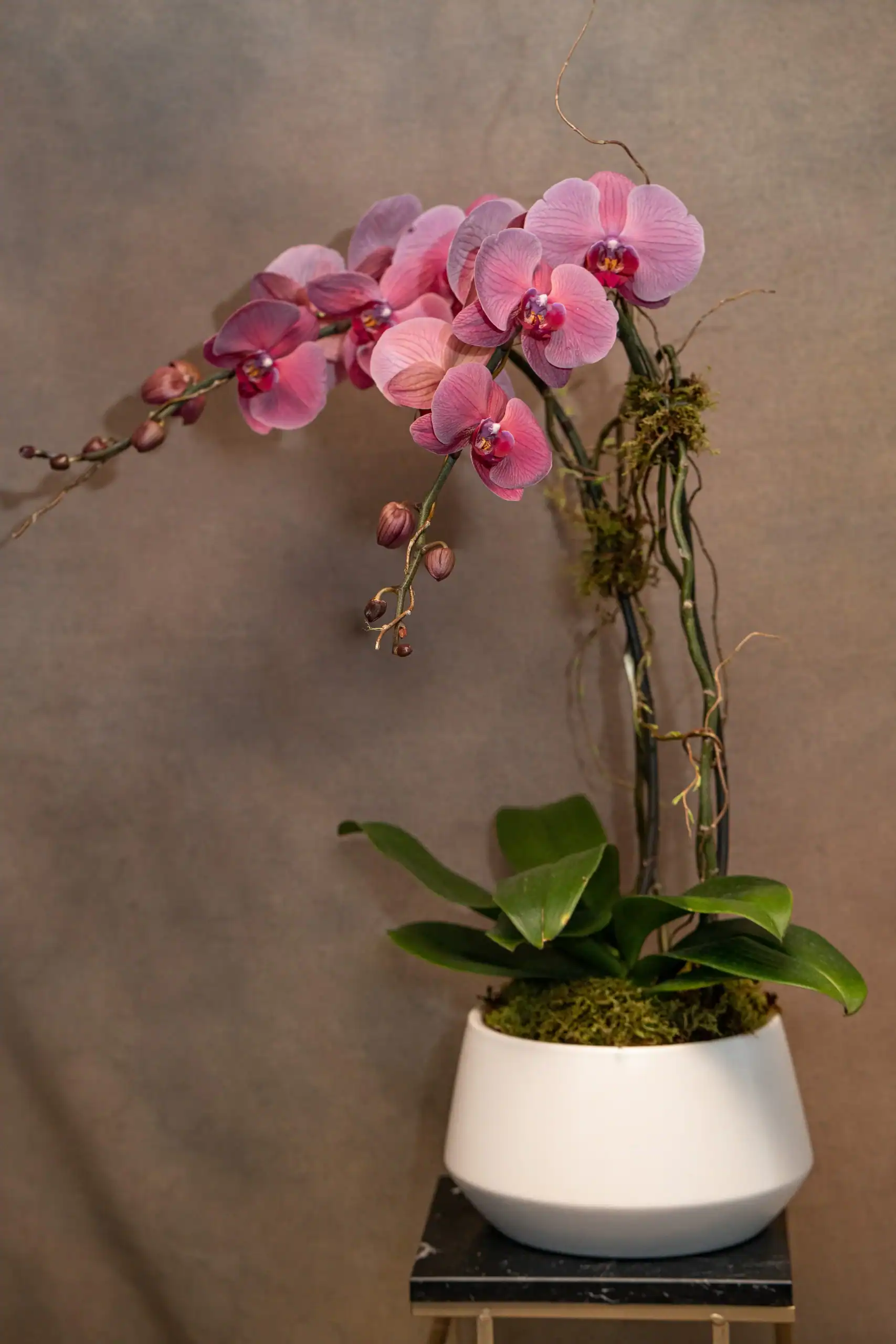
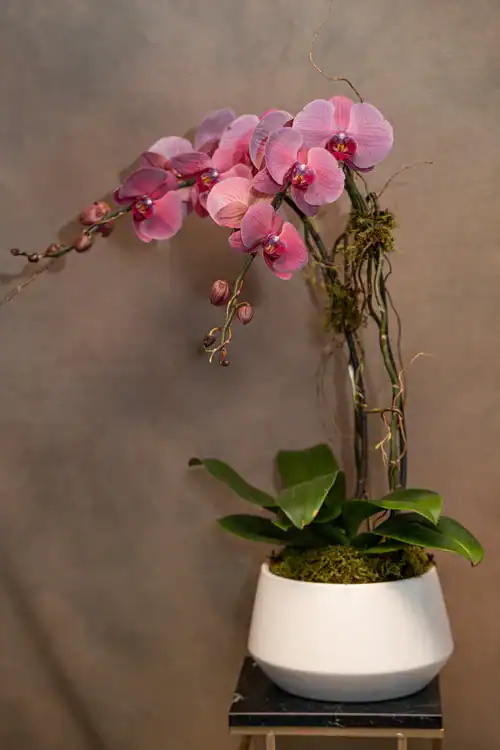
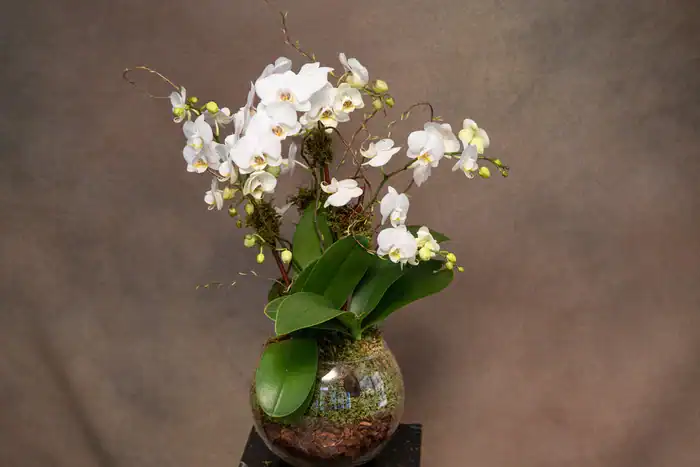
Orchids get a bad rap for being high-maintenance, but that’s mostly myth. The right orchid in the right spot is one of the easiest, longest-lasting arrangements you can have in a Midtown apartment.
Phalaenopsis orchids—the ones you see everywhere—are perfect for apartment living. They’re compact, elegant, and they bloom for weeks, sometimes months. They don’t need direct sunlight, which is a lifesaver if your apartment faces a brick wall or gets limited natural light. Bright, indirect light is enough, which means they’ll thrive on a desk near a window or a bathroom counter with a frosted window.
Watering is simple: once a week, maybe less. Overwatering kills orchids faster than neglect, so if you forget for a few days, they’ll forgive you. Just avoid letting them sit in standing water.
The visual payoff is huge. Orchids have that sculptural, modern look that feels expensive without trying too hard. A single white orchid in a minimalist pot looks like something out of a design blog, but it costs a fraction of what you’d pay for a weekly bouquet subscription.
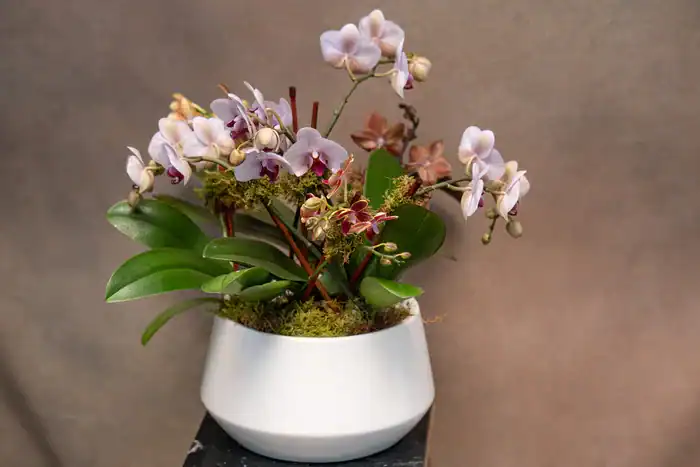
They’re also versatile. You can cluster a few small orchids together for a more dramatic display, or keep one solo for that clean, streamlined look. Either way, they add a sense of calm and sophistication that’s hard to replicate with other flowers.
For anyone working from home in a small apartment, an orchid on your desk does double duty. It’s a visual reminder to take a breath, and it’s been shown to reduce stress and improve focus—both of which are in short supply when your bedroom doubles as your office.
If you’re worried about keeping it alive, start with one. See how it goes. Orchids are more forgiving than you think, and once you realize how easy they are, you’ll wonder why you didn’t start sooner.
Small apartments don’t have to feel small. The right flower arrangements shift the energy of a room, reduce stress, and remind you that beauty doesn’t require square footage—just intention.
Whether you’re drawn to the simplicity of a single-stem statement, the elegance of an orchid, or the grounding effect of biophilic design, the flowers you choose matter. They’re not just decoration. They’re an investment in how you feel when you walk through the door at the end of the day.
If you’re ready to transform your Midtown apartment into the sanctuary it should be, we can help at Columbia Midtown Florist. Fresh, modern arrangements designed for real spaces, delivered the same day you order. Because you deserve a home that feels like more than just a place to sleep.
Summary:
Article details:
Share: