Spring brings Midtown's best flower selection. Learn which seasonal blooms are at their peak, where to find fresh cut flowers, and how to choose quality stems.
Spring isn’t just about warmer weather. It’s when flower farms hit peak production and wholesale markets overflow with variety. From mid-March through early June, you’re buying flowers at the height of their natural growing season, which means better quality, longer vase life, and more options than any other time of year.
The difference is noticeable. Spring flowers arrive fresher because they don’t spend as long in transit or storage. Seasonal bulb flowers like tulips, daffodils, and hyacinths are harvested at their prime instead of being forced to bloom out of season. You’re working with nature’s timing, not against it.
For anyone buying flowers in Midtown, spring is when we have direct access to the best selection from NYC’s wholesale flower market. That proximity matters. The flowers you see today might have been cut yesterday, not flown in from another continent two weeks ago.
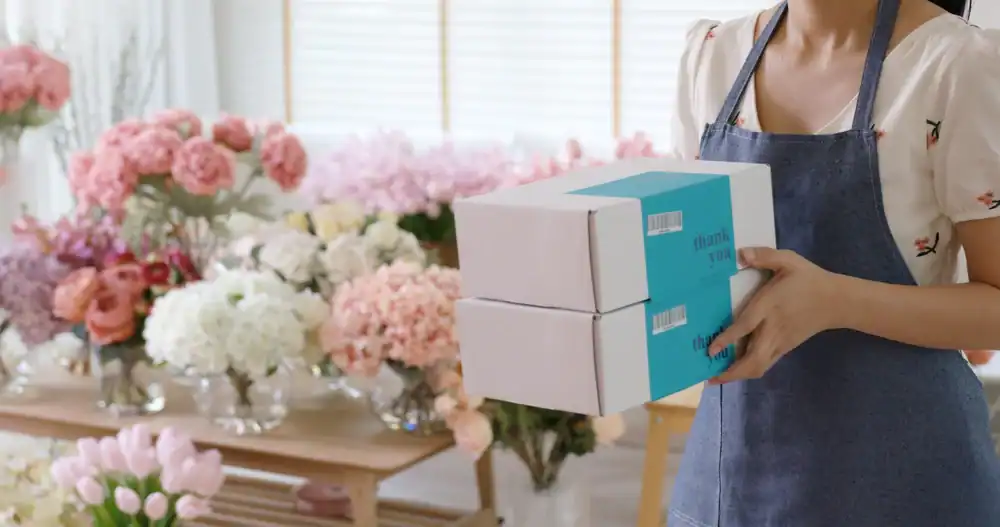
Not all flowers are created equal, and spring bulb flowers prove it. These are blooms that grow from underground bulbs planted in fall and emerge in spring—tulips, daffodils, hyacinths, crocuses, and ranunculus. They’re different from roses or carnations that growers can produce year-round in greenhouses.
Bulb flowers have a short season. That’s actually what makes them special. They’re only available when they’re naturally ready to bloom, which means you’re getting them at their absolute best. A spring tulip bought in April will outlast a forced tulip from January by days, sometimes a full week.
The colors are more vibrant too. Spring bulbs develop richer pigments when they’re grown in season. You’ll notice it in the deep purples of hyacinths, the buttery yellows of daffodils, and the saturated pinks of tulips. These aren’t washed-out versions of themselves—they’re the real thing.
Bulb flowers also tend to be more affordable in spring. Supply is high, so prices drop. You’re not paying a premium for out-of-season scarcity. This is when affordable luxury blooms actually make sense. You get premium quality without the markup that comes with buying tulips in December.
And here’s something most people don’t realize: many spring bulb flowers keep growing after you cut them. Tulips will continue to stretch toward light, which gives arrangements a natural, organic look. Daffodils stay perky for over a week if you trim the stems and change the water every couple days. Hyacinths fill a room with fragrance that no candle can match.
If you’ve been disappointed by flowers that wilt within 48 hours, spring bulbs are your reset. They’re bred to survive unpredictable spring weather outdoors, which means they’re surprisingly hardy once cut. Just keep them away from direct heat and they’ll reward you with a solid week of color.
Knowing what’s in season doesn’t help if you can’t tell fresh from fading. Here’s what to look for when you’re buying spring flowers in Midtown or ordering online.
Check the stems first. Fresh cut flowers have firm, green stems with no sliminess or brown spots. If the ends look dried out or mushy, they’ve been sitting too long. A clean cut at the base is a good sign—it means someone recently trimmed them to extend their life.
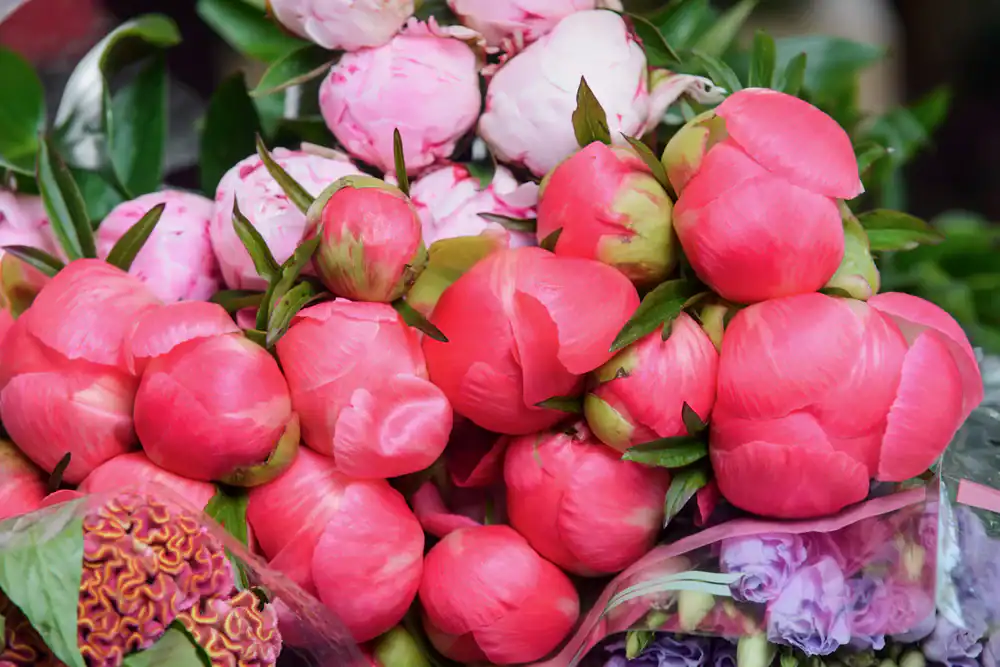
Look at the petals next. Spring flowers should have tight, vibrant petals with no browning at the edges. Tulips should still have a slight point at the top, not fully splayed open. Peonies should be in bud form or just starting to open—if they’re already wide open in the shop, you’re getting the tail end of their lifespan.
Leaves matter too. Yellowing or wilted foliage is a red flag. Healthy spring flowers have bright green leaves that stand upright. If the leaves are drooping, the flower is dehydrated and won’t recover well even with fresh water.
For daffodils and tulips specifically, gently squeeze the stem near the bloom. It should feel firm, not soft or hollow. A squishy stem means the flower is past its prime. And if you’re buying hyacinths, smell them. Fresh ones have a strong, sweet fragrance. If there’s no scent, they’ve been cut too long.
When ordering online, look for florists who source from local flower markets and offer same-day delivery. Flowers that are cut, arranged, and delivered within hours are exponentially fresher than ones that sit in a warehouse for days. In Midtown, proximity to the NYC Flower District gives us a huge advantage.
Also, don’t be afraid to ask questions. We can tell you exactly when our flowers arrived and how long they’ll last. If a florist can’t answer that, or if they’re vague about sourcing, that’s your cue to shop elsewhere.
One more thing: avoid bouquets with too many filler flowers. Baby’s breath and greenery are fine, but if half the arrangement is filler, you’re paying for bulk instead of blooms. Spring is when you can afford to be picky. The selection is there—make sure you’re getting the flowers you actually want.
Want live answers?
Connect with a Columbia Midtown Florist expert for fast, friendly support.
Not every spring flower peaks at the same time. Some bloom early, others hit their stride in late spring. Here’s what’s worth buying right now based on what’s actually in season and at its best quality.
Tulips are everywhere in spring, and for good reason. They’re at peak freshness from March through May, available in every color imaginable, and they last longer than most people expect when properly cared for. Single-stem tulips are affordable, and mixed bunches make an instant statement.
Daffodils and narcissus are the early risers of spring. They start showing up in late winter and stay strong through April. Their trumpet-shaped blooms are cheerful without being over the top, and they’re one of the longest-lasting cut flowers you can buy. Plus, they’re usually budget-friendly.
Peonies are the crown jewel of spring, but timing is everything. They’re typically available from late April through June, and they sell out fast. If you see fresh peonies in a Midtown shop, grab them. Their full, lush blooms are worth the splurge, and they’re only around for a short window each year.
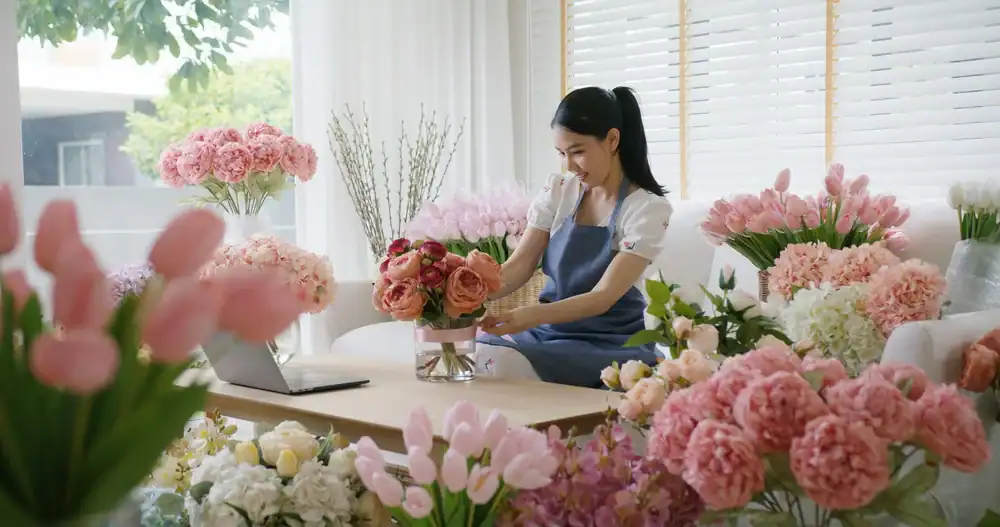
Tulips are the workhorse of spring flowers for sale. They’re versatile, affordable, and available in nearly every color. But not all tulips are the same. French tulips have longer stems and a more elegant look, while parrot tulips have ruffled, feather-like petals that add texture to arrangements.
When buying tulips, choose stems that are still mostly closed. They’ll open gradually over the next few days, giving you a longer display. And here’s a trick most people don’t know: tulips keep growing in the vase. They’ll bend and stretch toward light, which can look messy or beautifully organic depending on your preference. If you want them to stay upright, trim the stems every other day and keep the water level high.
Hyacinths are underrated. Their dense, clustered blooms pack serious fragrance into a compact package. One stem can scent an entire room, which makes them ideal for small spaces or desks. They come in deep purples, soft pinks, whites, and blues. The scent is strong—some people love it, others find it overwhelming—so consider that before filling your apartment with them.
Hyacinths also have thick, sturdy stems that don’t flop over like some spring flowers. They hold their shape well in arrangements and pair nicely with tulips or daffodils. Just keep them in fresh water and they’ll last a solid week, sometimes longer.
Ranunculus are the underdog of spring blooms. They look like roses but cost less and last just as long. Their layered petals create a full, romantic look, and they come in soft pastels and vibrant jewel tones. Ranunculus are popular with florists for weddings and events, but they’re also perfect for everyday arrangements.
The key with ranunculus is buying them when they’re still in bud form. They open slowly over several days, which extends their vase life. Once fully open, they’re stunning but won’t last much longer. Look for tight buds with just a hint of color showing through—that’s your sweet spot.
All three of these flowers benefit from clean water and regular stem trims. Cut about half an inch off the bottom every two to three days, and remove any leaves that would sit below the waterline. This prevents bacterial growth and keeps your flowers drinking properly.
And if you’re mixing these flowers together, keep in mind that daffodils release a sap that can shorten the life of other blooms. If you want to combine them, let daffodil stems sit in their own water for a few hours first, then rinse them before adding to a mixed arrangement.
Peonies are the most sought-after spring flower, and their season is short. You’ll typically find them from late April through mid-June, with peak availability in May. They’re expensive compared to other spring blooms, but their full, lush appearance and delicate fragrance make them worth it for special occasions.
When buying peonies, look for buds that are just starting to soften. Rock-hard buds might not open, and fully open peonies will drop petals within a day or two. The sweet spot is a bud that has some give when you gently squeeze it—firm but not hard. Those will open beautifully over the next few days and give you the longest display.
Peonies are also a bit finicky. They need clean water, cool temperatures, and a fresh cut every couple of days. Don’t place them in direct sunlight or near heat sources. Treat them right and you’ll get nearly a week of blooms. Ignore them and they’ll wilt in two days.
Daffodils are the opposite—low-maintenance and reliable. They’re one of the first spring flowers to appear, often showing up in late February and lasting through April. Their bright yellow and white blooms are a signal that winter is over, and they’re nearly impossible to kill once cut.
The main thing to know about daffodils is that they release a sap that can harm other flowers. If you’re creating a mixed bouquet, condition daffodils separately first. Let them sit in their own water for a few hours, then rinse the stems before combining them with other blooms. This simple step prevents the sap from shortening the life of your arrangement.
Daffodils also prefer shallow water—just a few inches is enough. Too much water can cause the stems to rot. Change the water every other day and they’ll stay fresh for well over a week.
Irises are another spring favorite that peaks in late spring. They have dramatic, sculptural blooms with intricate patterns and bold colors. Irises are more delicate than tulips or daffodils, so handle them carefully. Their petals bruise easily, and once damaged, they won’t recover.
Buy irises when the buds are just starting to show color but haven’t fully opened yet. They’ll continue to develop in the vase, and you’ll get to watch the transformation. Each stem usually has multiple buds, so even after the first bloom fades, you’ll get a second round of flowers from the same stem.
Irises don’t last as long as some spring flowers—usually five to seven days—but their unique look makes them a standout choice. They’re especially popular for modern, minimalist arrangements where the focus is on a few statement blooms rather than a packed bouquet.
Timing matters with all of these flowers. Peonies in early April are likely forced and won’t perform as well as peonies in May. Daffodils in June are past their prime. Irises in March are out of season. Pay attention to natural bloom times and you’ll get better flowers that last longer and look more vibrant.
Spring is when flowers for sale actually make sense. The selection is better, the quality is higher, and you’re working with nature’s schedule instead of fighting it. Seasonal bulb flowers like tulips, peonies, daffodils, and hyacinths are at their peak right now, which means you’re getting blooms that last longer and look better than anything you’d buy off-season.
The key is knowing what to look for—fresh stems, vibrant petals, tight buds—and understanding when each flower hits its stride. Buy tulips and daffodils anytime from March through May. Wait until late April for peonies. Grab hyacinths and ranunculus while they’re abundant and affordable.
If you’re in Midtown and want fresh cut flowers that actually deliver, we have direct access to NYC’s wholesale flower market and specialize in seasonal blooms at their peak. Spring doesn’t last forever—make the most of it while the selection is here.
Summary:
Article details:
Share: